
By Steven Hayes, President of WorkHorse
When managing your alarm company invoicing inside WorkHorse (or any accounting platform), you might come across two similar-sounding actions: voiding an invoice and writing off an invoice. They may seem interchangeable, but financially, they’re very different.
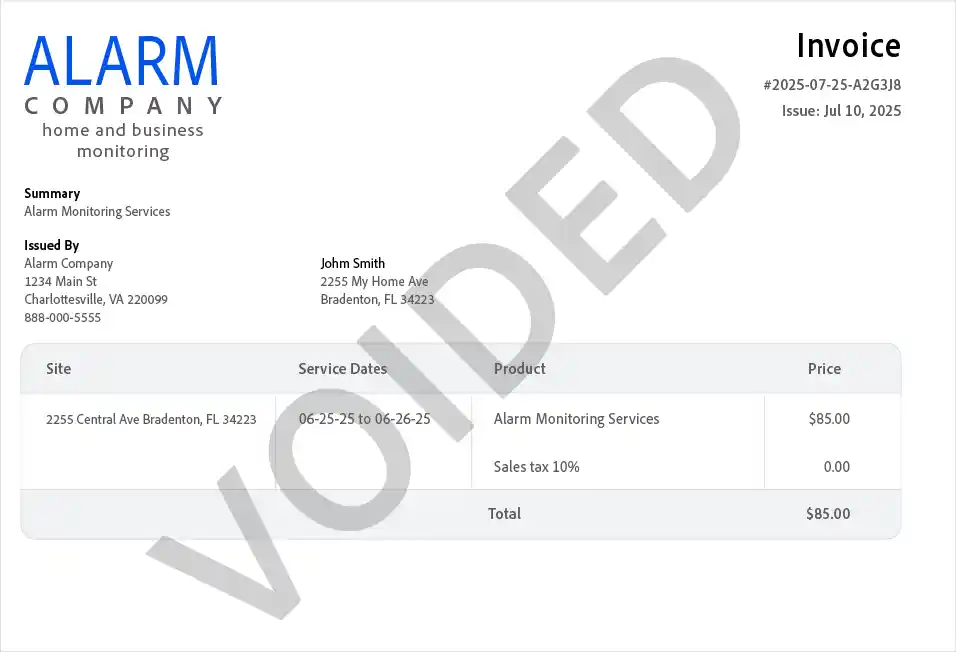
Think of this as canceling a mistake. Maybe you billed the wrong customer, double-billed, or created an invoice prematurely. When you void it, it’s as if it never happened. It won’t impact your revenue or financial reports because the sale was never recognized.
This one stings a little. You created a valid invoice, expected to get paid, and counted it as revenue. But months passed, and the customer never paid. Maybe they’re out of business, maybe they just vanished. Now, you write it off — officially recognizing that it’s uncollectible. That’s a hit to your profit, not your revenue. The sale still happened, but now it’s categorized as a bad debt expense.

Understanding the difference protects your books from looking inflated or incorrect. Use void when it was never real. Use write-off when it was real — but just didn’t work out.
At WorkHorse, we make it easy to track, tag, and reconcile both.
Think of this like erasing a mistake before anyone acted on it.
- ✅ You created an invoice (a bill to a customer) but realized it was wrong or shouldn’t have happened (e.g., billed the wrong person, duplicate invoice, etc.).
- 🧽 So you void it — like it never existed.
- 🧾 On your books, no money was expected, and no money is missing.
- 📉 It doesn’t affect your revenue or bad debt because it was never real income.
This is like giving up on getting paid after you already expected the money.
- 📬 You sent a real invoice and expected to get paid (so it counted as revenue).
- 😩 But the customer never paid, maybe they went out of business or ghosted you.
- 🚫 So you write it off — meaning you accept that the money won’t come in.
- 📉 Your books show this as a loss (called a “bad debt expense”).
- 💵 It reduces your net income, but your revenue still shows the original sale — you’re just adjusting for the unpaid part.
Action | When to Use | Financial Impact |
Void | Invoice was a mistake | No revenue recorded, no effect on profit/loss |
Write-Off | Invoice was legit but never paid | Revenue stays, but a loss is recorded (bad debt) |
Let us help you streamline your operations and achieve greater success with our all-in-one software solution.

We are your Single Point of Data Entry