
How All-in-One Alarm Software Boosts Recurring Monthly Revenue (RMR)
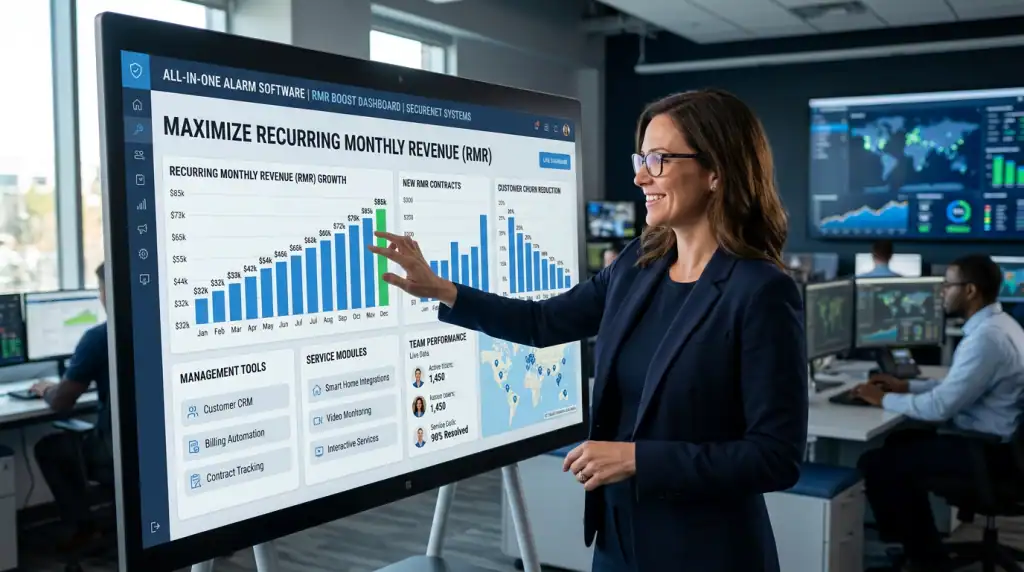
Every alarm company has two types of money. The kind that comes in after a job is done, and the kind that shows up on its own every single month. Mostly, owners chase the first one, but the smart ones build the second.
The second one is a steady monthly income, known as recurring monthly revenue (RMR). It is what separates a real business from one that constantly needs the next customer to survive.
In this blog, we’ll discuss why RMR is worth building, what happens when you track it by hand, and how alarm software for RMR makes the whole thing a lot easier to manage.
What Is Recurring Monthly Revenue (RMR) in the Alarm Industry?
Recurring Monthly Revenue (RMR) is the money your security business makes every month from monitoring and service contracts. Such income is different from one-time installation jobs because the payments repeat on a regular schedule.
For example, an installation job gives you a single payment, but RMR keeps money coming in even when you are not busy with new projects.
According to Security Sales & Integration, security dealers and integrators saw a 23% growthin recurring monthly revenue over traditional equipment sales.
This shift is happening because relying solely on hardware sales stops your income the moment a job ends. By building a strong RMR base instead, you create a stable business that is much easier to manage. Such steady cash flow helps you pay for tools and staff without worrying about where the next customer will come from.
The second one is a steady monthly income, known as recurring monthly revenue (RMR). It is what separates a real business from one that constantly needs the next customer to survive.
In this blog, we’ll discuss why RMR is worth building, what happens when you track it by hand, and how alarm software for RMR makes the whole thing a lot easier to manage.
Why Recurring Monthly Revenue is Important for Alarm Dealers

Most security companies realize quickly that they cannot survive on hardware sales alone. If your income only comes from installations, the money stops the moment the job is done. That is why building recurring revenue for alarm dealers is the only way to create a business that actually has a future, because monthly monitoring fees and service contracts keep money coming in even on days when no new jobs come in.
Reliable monthly income makes your company worth more money, too. If you ever decide to sell your business, a buyer will look at your RMR first. They want to see long-term customers who have been consistently paying for monitoring services for many years.
This steady cash flow allows you to plan for the future. You can hire more technicians or buy better tools because you know exactly how much money is coming in next month. It takes the guesswork out of growth.
The Problem with Managing RMR Manually
Many owners start out using simple spreadsheets to keep track of their billing. It works when you have ten customers, but it becomes a nightmare when you have two hundred.
You end up spending valuable time staring at rows of data and trying to remember who has paid and who has not yet.
When you manage things by hand, you will eventually miss a payment or forget to send an invoice.
Customers sometimes get missed during a renewal period, and you lose that account forever just because nobody called them. This administrative work eats up hours of your time that you should spend finding new leads.
How Alarm Software for RMR Simplifies Everything

Instead of you doing the work, the software follows a set of rules you create. The transition from manual to digital work means you can scale your business without needing to hire a full-time office manager just to handle the paperwork. Here is how alarm software for RMR simplifies things for you.
Automated RMR Billing
One of the biggest leaks in an alarm company is the time spent on invoicing. With modern RMR billing tools, you can set up a schedule once and then walk away. The system sends the invoices and processes credit card payments or bank transfers on the same day every month.
If a payment fails, the software can automatically send a polite reminder to the customer. It reduces the number of failed payments you have to chase down manually and keeps your cash flow steady.
Easier Alarm Subscription Management
Your customers often want different levels of service. Some might only want basic monitoring, while others want video storage and mobile app access. Keeping track of these different tiers is challenging without alarm subscription management features.
Good software lets you see exactly what each person is paying for in one click. If a customer wants to upgrade their plan, you can change it in the system instantly. It keeps your records clean, so you always provide the right service for the right price.
Never Miss Alarm Service Renewals
Contracts do not last forever, and losing a customer because a paper contract sat in a drawer is a huge mistake. The software tracks every expiration date for you. It provides alerts for alarm service renewals so you can reach out to the client before the service stops.
An alarm software keeps your churn rate low, which means you keep more of the customers you worked so hard to get. It turns a potential loss into a guaranteed renewal.
How All-in-One Alarm Platforms Help Increase RMR
An all-in-one alarm platform combines billing, monitoring, customer records, and service management into a single system. Instead of using separate tools, everything your team needs is stored in one place. This centralized setup makes it easier to track customer activity and identify opportunities to grow Recurring Monthly Revenue (RMR).
When all your data sits in one place, you can see patterns that were invisible before. You might notice that many of your customers haven’t upgraded in years. That gives your sales team a perfect reason to call those people and offer a better service plan.
Better tracking also leads to better customer service. When a technician arrives at a house, they can see the full history of that account on their phone. They know exactly what the customer is paying for and can suggest add-ons like extra smoke detectors or smart locks.
Because the software makes the back office run so smoothly, you have more time to focus on these sales opportunities. You move from being a reactive business that just fixes problems to a proactive business that builds value.
Read More: Need Cash? How Your RMR Can Be a Lifeline
How to Choose the Right Alarm Software for RMR
The best platform should focus on a single point of data entry, which ensures that any information you type once appears everywhere in your system instantly. The centralized approach eliminates the need to jump between different apps to update a single customer file.
Central Station Sync
Your RMR software must connect directly to your monitoring station. Seamless integration keeps all customer files identical and stops you from typing the same data into two different systems. Having a direct link ensures that emergency contact updates or new account activations happen without delay or human error.
Accounting Integration
The alarm company RMR billing tool should link with QuickBooks or similar accounting apps. Automatic syncing makes sure your service records always match the actual money in your bank account. Such a connection saves hours of manual reconciliation and helps you find billing gaps before they cost you money.
Automated Collections
Good systems handle credit card payments and send out reminders on their own. These features keep your cash flow steady without you having to call customers for late payments. Automated retries for failed cards mean you spend less time chasing debt and more time finding new leads for your business.
Scalable Operations
Pick a platform that can manage RMR access control as your business grows. You want software that can handle new types of security jobs without needing a total update later. Choosing a scalable system allows you to add video monitoring or mobile app services to your existing accounts with just a few clicks.
Final Thoughts
Building a successful security business requires more than just installation work. You must protect the steady money you earn each month to stay ahead. A move away from slow manual billing and messy spreadsheets is the only way to safeguard your income. By focusing on recurring monthly revenue, you turn a small local shop into a high-value company that grows on its own.
Companies should look at current processes to find where double data entry slows down the team. A switch to an automated system removes the stress of paperwork and allows more focus on new sales opportunities.
At Work Horse SC, we help you automate your billing and grow your RMR the right way. Schedule a demo with us today so we can help you manage your entire business from one place.
Frequently Asked Questions
What is recurring monthly revenue in the alarm industry?
Recurring Monthly Revenue (RMR) is the predictable income alarm companies earn each month from services like monitoring, maintenance plans, and security subscriptions.
How do alarm companies generate RMR?
Alarm companies generate RMR by offering ongoing services such as monitoring, service contracts, equipment leasing, and cloud-based security features.
What software helps manage alarm RMR billing?
Alarm billing software or security company CRM platforms help manage RMR by automating invoicing, subscription tracking, payment processing, and contract renewals.
Why is RMR important for alarm companies?
RMR provides stable and predictable cash flow, improves business valuation, and allows alarm companies to grow with consistent monthly income.
How can alarm dealers increase recurring revenue?
Alarm dealers can increase RMR by offering monitoring plans, maintenance contracts, cloud services, and subscription-based security features.
What features should alarm billing software include?
Alarm billing software should include automated billing, subscription management, contract tracking, monitoring integrations, and accounting integrations like QuickBooks.
Let us help you streamline your operations and achieve greater success with our all-in-one software solution.

We are your Single Point of Data Entry