
Central Station Redundancy: What Alarm Company Owners Need to Know Before Signing a Monitoring Contract
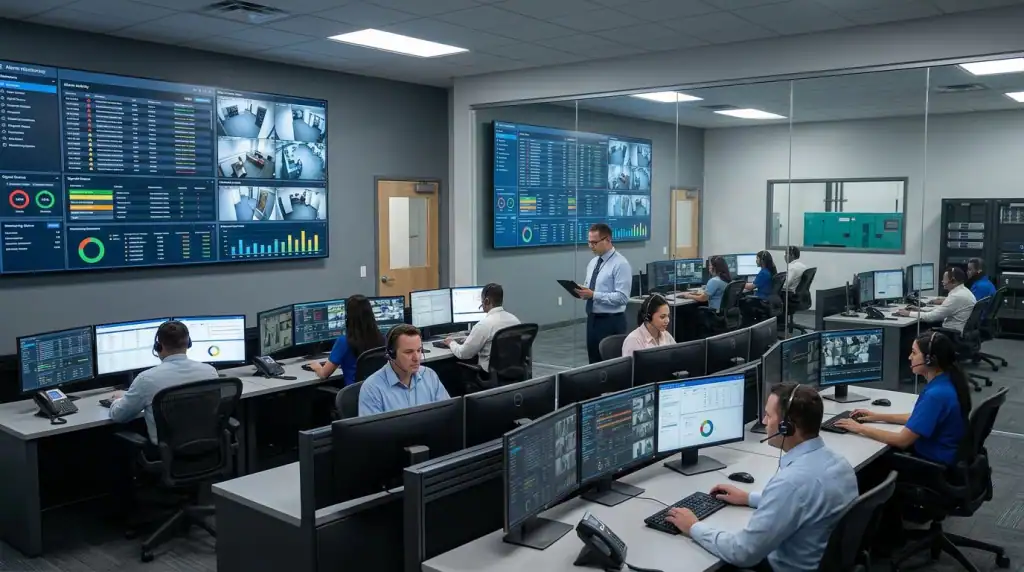
Choosing a monitoring partner is one of the most important decisions an alarm company owner can make. While pricing, technology, and service levels often receive the most attention, central station redundancy is another critical factor that should not be overlooked.
Redundancy helps ensure alarm signals continue to be received and processed even if a monitoring center experiences an outage, system failure, or other disruption. Understanding how redundancy works can help you evaluate monitoring providers more effectively and make a more informed decision.
This guide explains what central station redundancy means, why it matters, and what questions to ask before signing a monitoring contract.
Quick Summary
Central station redundancy refers to having a fully operational backup monitoring facility that activates when the primary station fails. For alarm companies, it protects 24/7 monitoring, reduces downtime risk, and safeguards customer trust. Without redundancy, even short outages can disrupt emergency response, billing accuracy, and service reliability across your entire operation.
What is Central Station Redundancy?
Central station redundancy means having one or more backup monitoring facilities that allow operations to continue if the primary station goes offline. It is basically the use of duplicate systems, such as power grids, internet connections, and physical facilities, to make sure that the system keeps receiving signals and the dispatch keeps moving.
In simple terms, it’s a built-in backup system for alarm monitoring operations. That means if the main station goes offline due to a power failure or network issues, the other facility automatically takes over and continues monitoring. That’s the reason it’s called a redundant backup.
Why Does Redundancy Matter for Alarm Businesses?
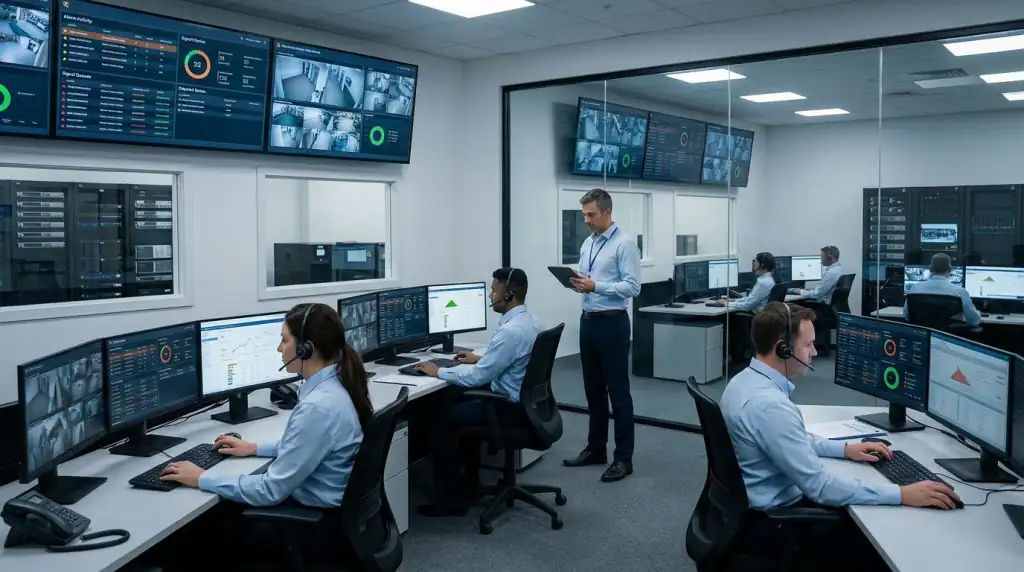
Redundancy should be an integral part of your considerations whenever signing a central station fire alarm monitoring contract. Here are some of the most prominent reasons that make it an essential factor to consider before the agreement:
Supports Continuous Monitoring
One of the main reasons why an alarm business needs redundant backup is to ensure continuous monitoring of all accounts. This is especially important for companies that offer 24/7 protection. If there is no backup facility to receive and process signals, your business may face service interruptions that affect customer confidence and operational reliability.
Reduces Risk of Service Interruption
Another way a redundant backup facility helps your alarm business is by reducing the risk of service interruption. When there are no downtimes, you actually protect residential and commercial properties with fewer interruptions. That continuous protection is what retains customers and helps you stop silent RMR loss over time.
Ensures 24/7 Emergency Response
Another benefit of partnering with a monitoring company that has strong redundancy capabilities is that it supports 24/7 response continuity. If the central station fails at night and an emergency signal arrives from a customer’s account, the backup facility processes it and dispatches the appropriate emergency services immediately.
Helps Meet Regulatory Compliance
Alarm companies in the USA and Canada have to deal with strict compliance requirements connected to monitoring standards. These requirements include certifications, such as UL Listed and TMA Five Diamond, that usually have specific redundancy criteria built in. Working with a provider that lacks proper redundancy may limit your ability to meet certain certification, compliance, or customer contract requirements.
Prevents Sudden Data Losses
Customer records, signal history, billing details, and service notes are critical to alarm company operations. But unfortunately, it can happen without redundancy and can lead to missing event logs, lost customer records, and incomplete alarm histories. That means a redundant backup facility is not just a choice but a necessity for alarm dealers.
Supports Customer Trust Retention
Most customers don’t see whether your central station has redundancy or not. Instead, they just expect 24/7 protection from your side, which is only possible if your alarm company has a backup facility. Without reliable backup processes, service interruptions can damage customer trust and increase cancellation risk.
What Questions to Ask Before Signing a Commercial Fire Alarm Monitoring Contract?
Not all monitoring providers offer the same level of redundancy. Asking the right questions can help you verify their capabilities and identify potential gaps before entering a monitoring agreement.
Does the provider operate a fully redundant monitoring center?
Ask directly whether they run more than one fully staffed and fully functional facility. If so, that’s a green flag, but if they talk about disaster recovery plans or backup servers, remember that those are two different things and have nothing to do with the redundancy.
A real redundant center can handle your full monitoring load independently at any time without interruptions, delays, or reduced monitoring capabilities.
Is the backup station in a separate geographic location?
Another thing you need to ask is about the separate geographic location of the backup station. A backup facility in the same building or the same metro area does not protect you against threats, like regional power failures, flooding, hurricanes, or large-scale infrastructure disruptions.
True geographic redundancy means the two sites cannot be taken down by a single event. So, ask for specific locations and verify they are on separate utility grids.
How quickly does failover happen?
An automatic failover that completes in under a minute is a completely different situation from a manual process that takes hours. Ask how the switch works, whether it is automatic or manual, and how long it has taken in past incidents.
Also ask about the provider’s recovery time objective, or RTO, which is the target time for restoring service after an outage. These specifics tell you whether the provider can actually protect your customers during an emergency.
Is data replicated in real time?
One more question you should ask is related to the data replication in real time. A provider may be able to transfer operations to a backup facility, but alarm signals, account information, or event data can still be lost if data is not replicated continuously between locations.
So, ask whether customer records, signal logs, and dispatch history are replicated in real time. Besides that, you should also discover what happens to data captured in the gap between the last sync and the moment of failure.
Has the redundancy plan actually been tested?
A plan that has never been tested is not a safety net. Ask when the provider last ran a full failover drill, how often testing is scheduled, and whether results are documented. Monitoring providers that take this seriously can show you records. If a provider gives vague answers or cannot share testing records, treat that as a serious warning sign.
In short, you should look at redundancy, technological capabilities, regulatory compliance, and contractual flexibility when hiring a wholesale fire alarm monitoring company. Along with these factors, don’t forget to check local reputation and industry affiliations, reporting capabilities, and dealer support commitment.
When you choose a monitoring firm with all these factors in mind, you make the right decision, which directly impacts your operational efficiency and company value. However, even the best monitoring partner can only be as effective as the systems supporting your day-to-day operations.
That is where WorkHorse SCS comes in. Our all-in-one cloud management platform helps alarm companies streamline lead management, scheduling, service, billing, and customer data through a single point of data entry.
Request a free demo to see how it works and how it can integrate with your alarm business efficiently.
Summing It Up
To put it concisely, a well-established and trusted alarm business can’t operate without central station redundancy. Ignoring the redundancy factor can cost major interruptions in services and loss of customers, as well as recurring monthly revenue. That’s why you should always consider a monitoring company that has a fully functional backup facility.
However, redundancy alone does not guarantee uninterrupted monitoring. Your central operations platform should also integrate seamlessly with both the primary and backup systems used by your monitoring provider. Without that operational connection, even strong redundancy can still create errors in data flow, billing accuracy, and service visibility.
WorkHorse SCS gives alarm companies a single point of data entry for customer records, service activity, scheduling, billing, and central station integrations, helping your team reduce duplicate work and keep operations easier to manage.
Frequently Asked Questions
What are the typically managed monitoring agreement components?
A managed monitoring agreement typically covers monitoring scope, response protocols, signal handling, data ownership, uptime commitments, and contract duration. You should pay close attention to service level, termination terms, and liability clauses before signing.
Can a monitoring station operate without redundancy?
A station can operate without redundancy, but it creates a serious risk. A single point of failure, meaning one issue that can stop the whole monitoring process, whether equipment, power, or a natural disaster, can take the entire operation offline.
How can I verify the monitoring provider’s redundancy?
You should ask for documentation on backup facility locations, failover testing schedules, and certifications like UL Listing or TMA Five Diamond. You can also request references from other alarm dealers who have worked with that monitoring provider.
Ready to transform your alarm business? Contact WorkHorse today for a FREE demo and consultation.
Let us help you streamline your operations and achieve greater success with our all-in-one software solution.

We are your Single Point of Data Entry