
Central Station Fire Alarm Monitoring: How It Works & Benefits
If you are a fire alarm company owner, you might have heard about central station monitoring and its ability to streamline operations. However, the question is how it simplifies daily tasks and what other benefits it offers. Most importantly, you should be clear about how it differs from local fire alarms.
With insights into central station fire alarms and monitored security services, you can better protect your clients while running operations efficiently. Let’s learn about what exactly a central fire alarm system is, how it works, and how integrated monitoring simplifies day-to-day tasks for alarm companies.
Quick Summary
Central station fire alarm monitoring connects alarm systems to a professional monitoring facility that receives signals, verifies alerts, and coordinates emergency response. For alarm companies, central monitoring improves reliability, supports 24/7 protection, reduces operational challenges, and helps teams manage customer systems more efficiently.
What Is a Central Station Fire Alarm System?
A central station fire alarm system is a fire detection setup that sends signals directly to a professionally staffed monitoring facility instead of relying on a local alarm. Like a standard fire alarm, it also includes the usual hardware, such as smoke detectors, heat sensors, and pull stations. However, the main difference lies in where the alerts go once the alarm triggers.
The central station operates independently of the property, which means it can dispatch emergency services quickly. That means if a verified fire incident occurs at a centrally connected building, help will be on the way, even if no one is present at the property.
What is Central Station Fire Alarm Monitoring?
Central station fire alarm monitoring is the ongoing service of watching, verifying, and acting on signals coming from a building’s fire alarm system. It’s the operational layer that makes sure that no delays occur during a fire emergency. With integration to a central station, alarm companies can continuously monitor customer accounts without any disturbance.
If an emergency occurs, the staff at the central station verifies the alert and automatically dispatches local fire departments. This means that alarm companies can offer quicker emergency response support and enhance service reliability for their customers.
How Does Central Station Alarm Monitoring Work?
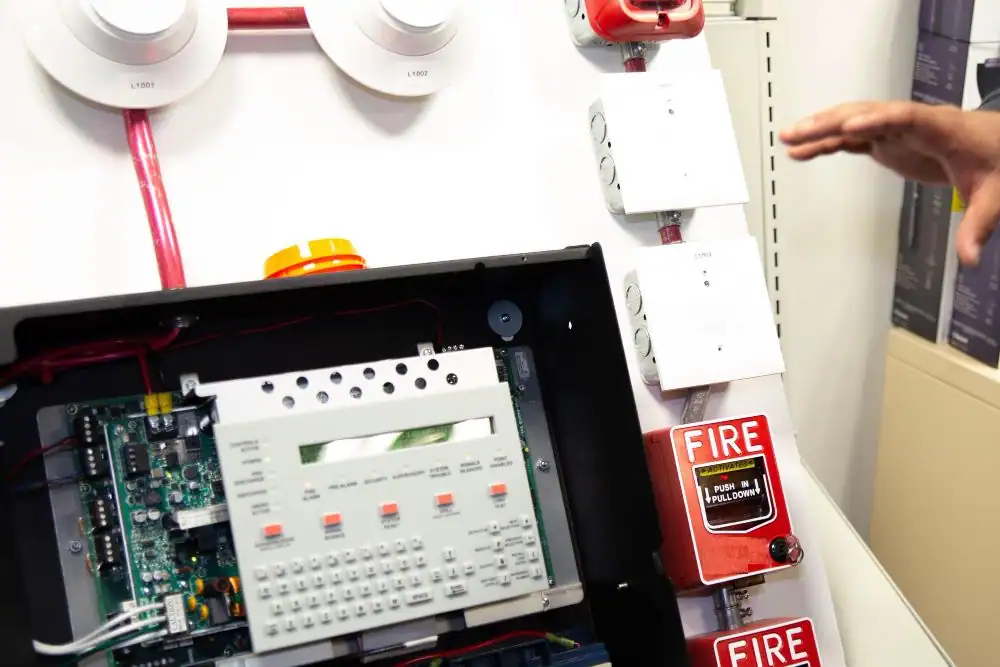
Central station monitoring follows a straightforward process that moves from alarm detection to emergency dispatch. Here is a quick overview of each step:
Alarm Detection
The first step involves detecting the alarm signals and analyzing them. The fire alarm panel at the property picks up on a hazard condition through its connected devices, whether that is a smoke detector sensing particulates or a heat sensor crossing a temperature threshold. The panel then registers the event and prepares to notify the monitoring facility.
Signal Transmission
Once the panel detects a condition, it sends a signal out through whatever communication path the system uses. Most modern installations rely on cellular or IP-based transmission because these paths are harder to disable than a single landline. The transmitted signal usually carries the following essential details:
- Account name
- Zone codes
- Triggered alarm type
Alert Verification
The third step of the process involves signal verification by trained experts. The operator receiving the signal reviews the account information and, depending on the protocols set for that property, may attempt a verification call to the site before dispatching. It makes sure that the emergency is genuine and it’s not associated with a false alarm.
Instant Dispatch
The monitoring station contacts emergency services directly as soon as the operator confirms a fire condition or as required by protocol. They provide complete information about the property address, the type of alarm, and any other relevant details the fire department needs to respond appropriately. That verified dispatching saves the property before it’s too late. Learn more about how alarm dispatch software helps security companies manage responses efficiently.
Central vs. Local Fire Alarm: What Is the Difference?
When considering integrated monitoring services, alarm companies should have an idea of how local alarms differ from those connected centrally. With a clear understanding of the differences, alarm dealers or company owners can select the appropriate monitoring solution to enhance their overall service quality.
The following comparison highlights the main differences between local and central station fire alarm systems.
Factor | Local Alarm | Central Station Alarm |
Who responds? | Anyone physically present | Trained 24/7 monitoring staff |
Typical response time | Unpredictable | 30-60 seconds or typically faster than local alarm response, depending on monitoring protocols |
Empty building coverage | None | Full coverage |
Backup protection | None | Includes redundant backup |
Verification before dispatch | Rarely happens | Standard practice |
Monitoring Location
A local alarm system keeps everything on the premises. Here is what typically happens in the case of local alarms:
- The horn sounds
- The strobe flashes
- Someone happens to hear it and decides to call 911 themselves.
A central station system routes the same trigger event to an off-site facility built specifically to receive and act on those signals, so the response does not depend on a bystander noticing.
Response Time
Local systems depend entirely on human luck. If a building is empty overnight or a tenant is asleep on another floor, the alarm can ring for hours before anyone calls for help.
On the other hand, central station systems remove that gap because trained operators are already monitoring and can dispatch fire services within roughly 30 to 60 seconds of signal receipt.
Round-the-Clock Protection
A local alarm offers protection only while someone is present and paying attention, which makes nights, weekends, and holidays a real vulnerability.
However, central station monitoring runs continuously, with staffed shifts covering every hour of every day. That means the protection does not drop off just because a building is unoccupied or closed for the evening.
Reliability
Local systems carry a higher risk of a missed event, since they rely on someone being close enough to hear and react.
In contrast, central monitoring adds a layer of redundancy through trained verification and dispatch protocols. Some central stations even have backup facilities, so a regional outage or technical problem doesn’t take the whole monitoring operation offline.
How Does Central Monitoring Streamline Operations for Alarm Companies?
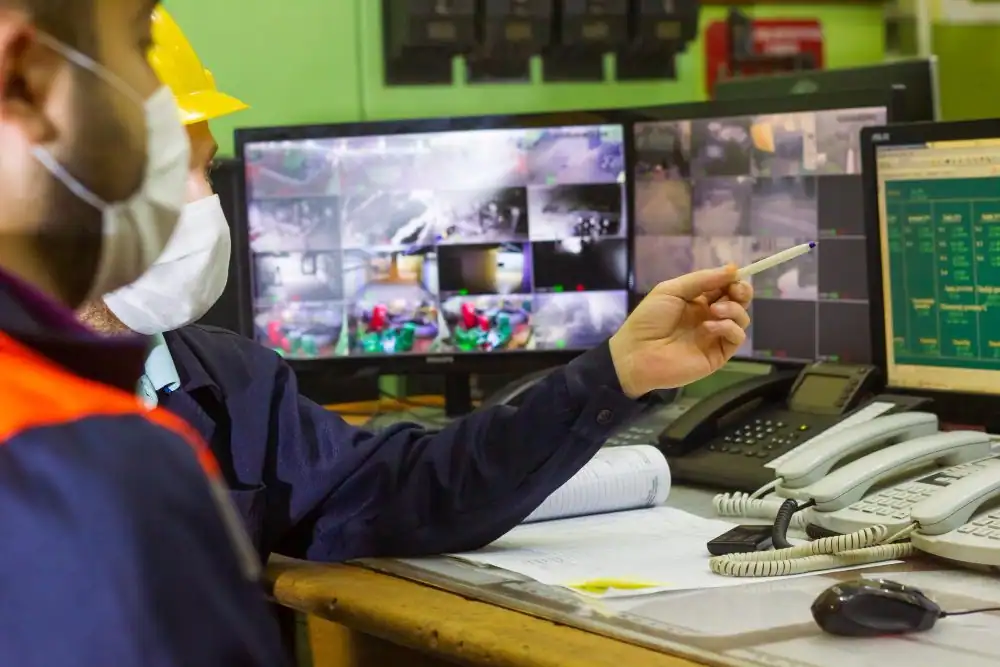
Central monitoring streamlines operations for alarm companies by reducing the manual workload tied to response, verification, and customer communication. It also cuts down on wasted dispatches and gives dealers a more reliable service to sell. Here is how it simplifies routine operations for alarm companies:
Speeds Up Alarm Response
Without a central station, an alarm company would need someone watching every connected account in real time. In reality, that’s not a realistic solution for fire alarm businesses. A central monitoring system solves that concern by putting trained staff on alert as they arrive. As a result, response times remain consistent, whether the dealer has ten accounts or one hundred.
Offers 24/7 Monitoring Support
Another benefit of integrated fire alarm monitoring systems is that they offer 24/7 protection. Alarm companies cannot staff their offices around the clock for every client; they should not need to. Central stations take that responsibility, which means a dealer’s customers get full overnight, weekend, and holiday coverage without needing an internal monitoring team.
Improved Resource Management
When monitoring is centralized, alarm companies do not need dedicated internal staff to watch signals. That flexibility frees up their team to focus more on installations, service calls, and account growth, instead of sitting in front of a monitor waiting for an alert. As a result, alarm companies can make better use of their workforce and expand operations more efficiently.
Reduces the Risk of False Alarms
False alarms are one of the biggest problems for alarm businesses. The good thing is that central stations catch false triggers before they even reach the fire department. That matters for alarm companies because excessive false dispatches damage the relationship with local fire departments and can sometimes lead to fines or stricter scrutiny on an account.
Enhances Customer Experience
One more benefit of a central station fire alarm system is that your customer satisfaction rates remain higher. When there is no delay in signal detection, verification, and emergency response, no one raises questions about your service. As a result, your number of accounts remains consistent, which helps you to better calculate RMR growth rate for your alarm company.
Supports Multiple-System Integration
Most properties run more than one type of alarm, covering fire, intrusion, and sometimes environmental monitoring like flood or temperature sensors. Central stations are built to receive and process signals from all of these system types through one connection, so alarm companies are not forced to juggle separate monitoring relationships for each protection type they sell.
Simplifies System Management
Central monitoring stations can easily be integrated with a field service management software. That means alarm companies do not need to manage dozens of disconnected local setups that don’t show account visibility status in real time. This integration provides a single point of oversight across an entire portfolio of clients, which makes troubleshooting and account updates much easier.
Brings in a Backup Monitoring Facility
Many reputable central stations often maintain a secondary facility that can take over monitoring duties if the primary location experiences an outage. This means client coverage remains intact and field operations continue without interruption. This level of redundancy helps alarm companies maintain reliable service and reduce downtime risks.
Who Benefits Most from Central Station Fire Alarm Monitoring?
Fire alarm monitoring at a central station can support alarm companies at every stage of growth, but it is particularly valuable for the following groups:
Business Type | Key Benefits |
Small Alarm Companies | Avoid building an internal monitoring center, reduce staffing costs, and offer 24/7 monitoring services. |
Growing Alarm Dealers | Scale account volume efficiently, maintain consistent response times, and support business growth without expanding monitoring staff. |
Enterprise Alarm Providers | Improve redundancy, gain better account visibility, and standardize monitoring and dispatch procedures across large customer portfolios. |
Multi-Service Security Companies | Monitor fire, intrusion, access control, and environmental systems through a single monitoring relationship, simplifying operations and management. |
Common Mistakes Alarm Companies Make When Choosing Monitoring Services
When selecting a central station monitoring provider, focusing only on cost can lead to service gaps and operational issues. Consider the following mistakes before making a decision.
- Selecting providers without backup facilities
- Focusing only on price
- Ignoring integration capabilities
- Overlooking response protocols
- Choosing monitoring services without redundancy
- Failing to verify compliance certifications
The Bottom Line
To put it simply, monitoring fire alarms at central stations is no longer an optional add-on for alarm companies. Rather, it has become a crucial part of the system to ensure smooth operations. From receiving the signals and reviewing accounts to verifying the alerts and dispatching emergency services, it streamlines every stage of the monitoring process.
Central station monitoring helps alarm companies improve response handling, reduce operational burdens, and provide a higher level of service. However, monitoring alone does not solve every operational challenge. Your team still needs efficient processes for scheduling, billing, customer management, and service delivery.
At WorkHorse SCS, we have that all-in-one cloud platform that brings lead management, scheduling, billing, and customer service history together under a single point of data entry. Regardless of which monitoring station you partner with, it offers seamless integration, so your operations run smoothly. So, request a free demo today and see how it can further streamline your day-to-day tasks.
Central Station Fire Alarm: FAQs
What does a central station mean?
It mainly refers to a facility that receives signals from thousands of customer accounts and automatically dispatches emergency services without any interruption. Central stations usually have dedicated staff who watch for signals 24/7 and respond within a few seconds.
What is central station redundancy?
It’s a duplicate system at a separate location that has all the facilities like a central monitoring station and can work independently in case the main system fails. The reason why monitoring companies have a redundant backup facility is to provide consistent 24/7 protection to the customers of alarm companies.
What’s the difference between a local and a central fire alarm?
The local fire alarm usually relies on manual response, while professional staff automatically detect and verify central fire alarm signals. That difference in alarm detection increases the response time of central alarms compared to local ones.
How much does a central station fire alarm cost?
A fire alarm system integrated with 24/7 monitored services typically costs around $30 to $100 per month. However, the upfront installation cost can range between $1,000 and $5,000 for residential systems.
Who monitors a central station alarm system?
A central station alarm system is controlled by trained operators who have hands-on experience working in professional monitoring facilities. These operators receive alarms, verify signals, and dispatch local fire departments before the situation becomes dangerous.
Ready to transform your alarm business? Contact WorkHorse today for a FREE demo and consultation.
Let us help you streamline your operations and achieve greater success with our all-in-one software solution.

We are your Single Point of Data Entry