
Why Lead Response Time Affects Close Rates for Security Companies
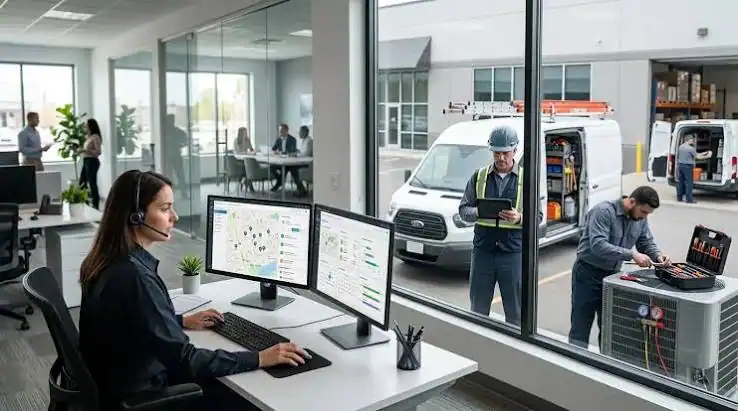
A 2026 study of 939 B2B companies found that leads contacted within five minutes had a 32% close rate, compared with just 12% for leads contacted after 24 hours.
For security and alarm companies, the same principle is worth paying attention to. When a commercial business owner or homeowner fills out a form for a new camera system or fire alarm inspection, they are not casually browsing. They usually have an immediate security concern or a builder waiting on a site plan. If you wait hours to return their call, another local dealer will get to them first.
This guide breaks down why response speed may affect your close rates, where bottlenecks happen in daily office workflows, and how to set up your team to win more deals without adding extra staff.
Key Takeaways
- Reaching prospects within five minutes captures interest while it is still fresh and improves close rates.
- Fast response time builds early trust and lets your team deliver proposals before competitors even return the call.
- Unclear lead ownership and disconnected software are the primary causes of slow callbacks.
- Automating lead alerts and assignments keeps inquiries moving instantly so representatives can respond without delay.
- Centralized lead management gives sales representatives the instant context needed to qualify prospects at the first touchpoint.
- Tracking response times alongside contact and appointment rates shows where leads are lost.
What Is Lead Response Time?

Lead response time measures how long your team takes to respond after a prospect submits an inquiry. For sales reporting, you can define what counts as a response so everyone measures the metric the same way.
While an automated confirmation email lets the prospect know their form went through, it does not count as real lead response time.
How Does Lead Response Time Affect Close Rates?
Faster response times change how prospects view your company and how smoothly deals move through your sales process.
Here is how lead response time shapes every step of the sales interaction:
It Affects Whether Initial Contact Happens
If you call a prospect within five minutes of their submission, they’re likely still at their computer or holding their phone.
If you wait three hours, they may be back in meetings or doing another essential task. The longer you wait, the harder it is to get them on the line, dropping your overall contact rate.
It Influences the Prospect’s First Impression
When a customer reaches out about protecting their building or family, they expect prompt service. If it takes your team two days just to return a phone call, the prospect assumes your installation crews and service technicians will be just as slow.
A quick response immediately builds trust and projects professionalism.
It Determines When Qualification Begins
You can’t quote a system until you know what the customer actually needs. Reaching a prospect quickly lets your sales reps ask key qualifying questions like:
- How many doors do you need to secure?
- Is this new construction or a retrofit?
- Do you need monitoring services?
Getting these answers early lets you route high-value commercial accounts to senior representatives right away and secure the deal.
It Affects How Leads Move Through the Sales Pipeline
When you reach a lead quickly, you can ask about their security needs and determine whether the project is a good fit. If an on-site survey is needed, you may also be able to schedule it during that first conversation.
But if you delay that initial touchpoint, you stretch out your entire sales cycle and give prospects more time to lose interest or talk to competing vendors.
It Influences Appointment and Proposal Rates
Responding early gives your team a chance to understand the project and present a proposal before the prospect moves further into the buying process. By reaching the prospect first, you shape the customer’s expectations around panel features and monitoring agreements.
Waiting to call often means you are forced to bid against a proposal that another dealer already submitted.
What Is a Good Lead Response Time for a Security Company?
For high-intent inquiries such as quote requests, aim to respond as quickly as your team reasonably can. A five-minute response target can provide a useful internal benchmark for inbound leads. Direct phone calls should be answered live or returned within minutes.
To maintain high close rates, your office needs a clear system to handle different types of incoming leads:
Lead Type | Recommended Priority | Appropriate First Action |
Direct Phone Inquiry | Immediate | Answer live or return missed calls within 5 minutes. |
Demo or Quote Request | Highest | Assign to a sales rep and call immediately. |
Installation / Monitoring Inquiry | High | Confirm project details and schedule an on-site walk. |
Referral | High | Call directly and reference the person who referred them. |
General Contact Form | Moderate to High | Review project details and assign to the right rep. |
What Causes Slow Lead Follow-Up in an Alarm Business?
Most security companies don’t ignore leads on purpose. Slow follow-ups are often the result of a few simple operational gaps:
- Leads Arrive Through Disconnected Channels
Inquiries come in through website forms, central station referrals, phone calls, and email accounts. If you have no single place to gather them, leads may get stuck in personal inboxes.
- No One Has Clear Ownership of the Lead
When a lead comes into a general info email address, everyone assumes someone else is handling it. Without clear assignment rules, inquiries sit untouched.
- Lead Details Are Missing
If a rep does not know what type of system the customer asked about, they spend extra time tracking down details before picking up the phone.
- After-Hours Inquiries Wait Until Next Morning
Prospects often research security systems in the evening. Without automated assignment, those leads have to wait until mid-morning the next day. - Follow-Up Depends on Individual Memory
Busy sales reps forget to make second or third follow-up calls when a prospect does not answer on the first attempt.
How Automation in CRM Improves Lead Follow-Up Times

Using software to clean up your sales workflow removes manual steps that slow your team down. Here is why your alarm company needs lead management software to improve inbound lead response time:
New Inquiries Enter One Centralized Record
Instead of checking three different email accounts and a spreadsheet, all incoming leads flow into one central database. Sales reps can see every new lead the moment it arrives.
Alerts and Assigned Tasks Create Clear Responsibility
With automated routing rules, your CRM can assign incoming leads based on criteria such as ZIP code or job type. It can also alert the assigned representative as soon as the lead enters the system. Everyone knows exactly who owns the lead.
Templates Support Faster Responses
Reps don’t need to write every email from scratch. Pre-built email and text templates let them send a polished reply in seconds.
Shared Notes Improve Sales Handoffs
When a prospect calls back, any office team member can open the customer record and assist them immediately without making the customer repeat their story.
Connected Workflows Reduce Duplicate Data Entry
When your CRM connects directly to your operations, your team enters customer information just once. That single entry builds a clean client record, and there are fewer chances of human error.
Moreover, integrated accounting software for security alarm companies cuts out repetitive administrative retyping and frees your staff to focus on serving clients.
What Lead Response Metrics Should Security Companies Track?
To improve sales performance, your alarm business needs a lead tracking measurement framework that checks lead activity from initial inquiry all the way through to signed contracts:
Metric | What It Reveals | How to Calculate | Benchmark Standard |
Average Response Time | Overall speed of initial outreach across all incoming leads | Total response time across all leads / total leads received | < 5 minutes |
Median Response Time | Typical response speed without extreme outliers distorting the average | List response times from fastest to slowest and select the middle number. | < 5 minutes |
Percentage Within Target | How consistently your team meets your speed standard | (Leads contacted within target time / total leads received) $\times 100$ | > 85% within 5 min |
Response Time by Source | Which channels (web form, phone, referral) get followed up on fastest | Filter average response time by incoming channel tag | < 5 min across all sources |
No-Response Rate | How many inquiries receive zero logged sales outreach | (Leads with zero logged outreach / total leads received) $\times 100$ | < 2% |
Contact Rate | Percentage of total leads that turn into a real, two-way conversation | (Leads with connected call or reply / total leads received) $\times 100$ | 50% – 60% |
Appointment Rate | How many contacted leads agree to an on-site survey or demo | (Scheduled site walks / total contacted leads) $\times 100$ | 40% – 50% |
Proposal Rate | How many qualified leads receive a formal system quote | (Delivered proposals / total completed site surveys) $\times 100$ | > 90% |
Close Rate | Percentage of total leads that sign contracts and generate RMR | (Signed monitoring/installation contracts / total new leads) $\times 100$ | 20% – 30% |
Note: Don’t stress about fixing everything at once. If your overall sales are low, fix your speed first. Start by improving response time and measuring what happens next. Faster follow-up may improve contact opportunities, but you should also track qualification, appointments, proposals, and close rates to find other weak points in your pipeline.
For a detailed look at how tracking your pipeline metrics improves response consistency, read our guide on how lead tracking helps alarm companies capture more revenue.
Wrapping Up
For alarm dealers and security integrators, lead response time can significantly affect sales performance. Responding to leads in minutes instead of hours keeps your pipeline moving. It builds immediate trust and helps you win quotes before competitors even get on the phone.
Speeding up your response time is much easier when your sales tools talk to the rest of your business. WorkHorse SCS helps your alarm company organize leads and reduce duplicate data entry. Our platform also keeps sales information connected directly to dispatching, stock tracking, and automated RMR billing.
If you are ready to organize your sales pipeline and win more deals, schedule a demo with WorkHorse SCS today.
FAQs
Does responding first guarantee that an alarm company will win the sale?
No, but it gives you a major advantage. Reaching the customer first lets you set the baseline for their security requirements and deliver a proposal while their need is still urgent.
What if my sales team is busy out in the field all day?
You don’t need reps sitting at a desk. You can set up auto-reply texts that message new leads instantly, acknowledge their request, and automatically book a call time.
Does speed actually matter for large commercial jobs with long decision times?
Large commercial projects may have longer sales cycles, but early response still gives your team more time to qualify the opportunity and schedule the next step. Speed matters, but it should support a strong sales process, not replace it.
Ready to transform your alarm business? Contact WorkHorse today for a FREE demo and consultation.
Let us help you streamline your operations and achieve greater success with our all-in-one software solution.

We are your Single Point of Data Entry